

Hallux valgus and safety shoes
Pain from hallux valgus in safety shoes? Here's how to protect your feet during your workday.
Hallux valgus can make the workday considerably more difficult—especially when safety shoes are required. Pressure on the ball of the foot, a toe box that’s too narrow, or stiff materials can exacerbate discomfort and restrict freedom of movement.
The good news: Not all safety shoes put the same amount of strain on the foot. Models with ample room in the forefoot, an anatomical fit, and flexible materials can help reduce pressure and significantly improve comfort.
In this article, you'll learn:
- what a hallux valgus is,
- which causes the misalignment,
- what treatment options are available,
- What to Look for in Safety Shoes,
- and what features characterize a bunion-friendly safety shoe.
What is hallux valgus?
Hallux valgus—commonly known as a bunion—is one of the most common foot deformities. In this condition, the big toe gradually deviates toward the other toes, while the metatarsophalangeal joint protrudes on the inner side of the foot.
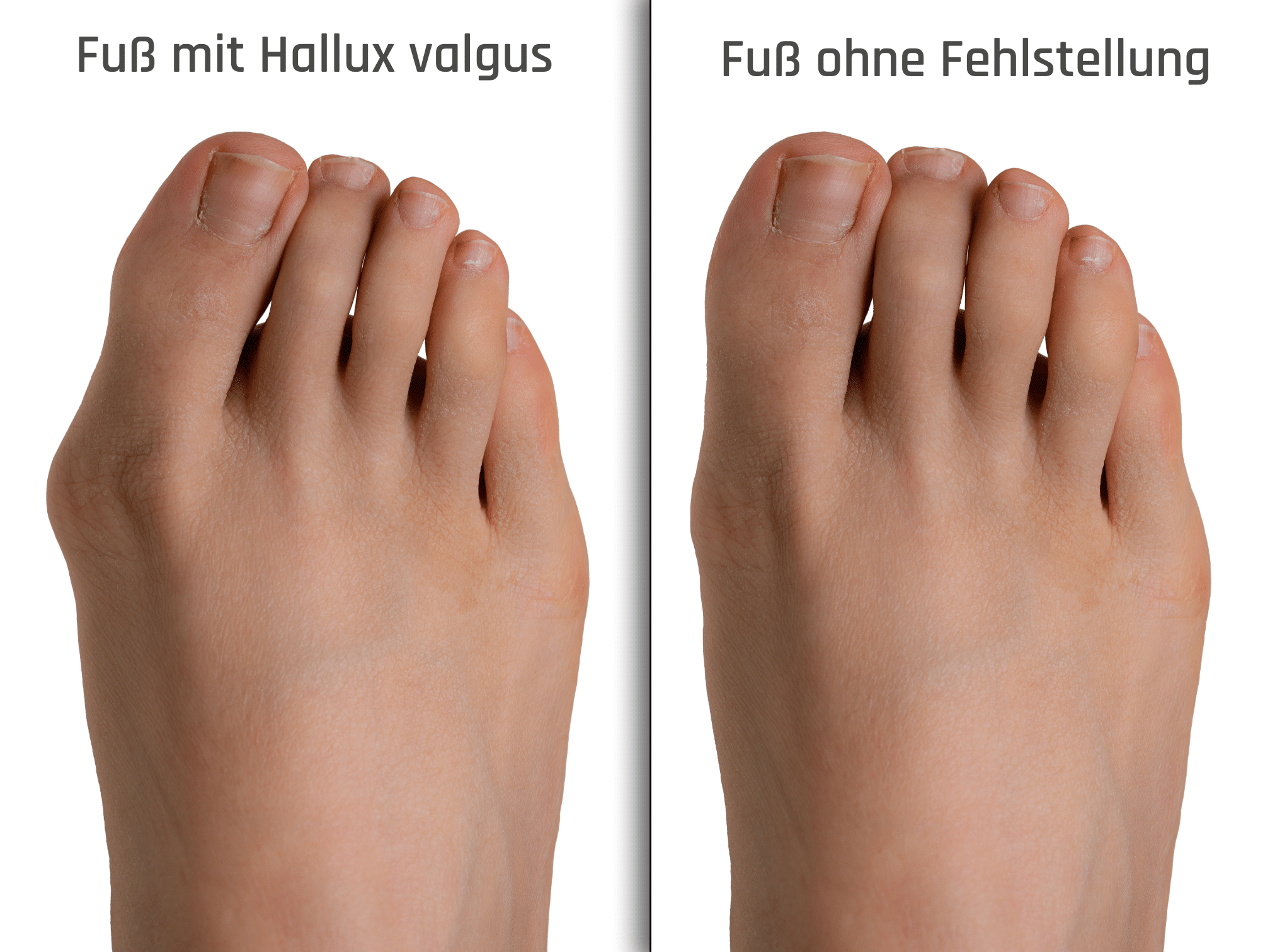
But the misalignment is far more than just a cosmetic problem.
The change in the position of the big toe alters the entire biomechanics of the foot. Body weight is no longer distributed optimally, causing certain areas to be chronically overloaded. This often leads to:
- Pressure marks
- Pain in the ball of the foot
- Inflammation
- limited mobility
- Changes in Gait Pattern
These symptoms can increase significantly, especially during a typical workday that involves long periods of walking and standing.
Practical Knowledge from Our Development Efforts
In the development of safety shoes, we repeatedly find that users initially attribute their pain to the safety toe cap. In fact, the cause often lies in a last that is too narrow overall. If the forefoot is constricted over time, the pressure on the already sensitive metatarsophalangeal joint of the big toe increases significantly.
Our orthopedic shoe technician, Ingo Wietrzychowski, sums it up:
"Hallux valgus is rarely just a problem with the big toe. More often than not, it indicates that the natural function of the entire foot has become unbalanced."
How does a bunion develop?
Hallux valgus usually develops over many years. In very rare cases, there is only a single cause. Rather, it is the result of several factors acting together.
Genetic predisposition
Many people are already predisposed to this condition. Weaker connective tissue or certain foot shapes, such as splayfoot, also increase the risk of hallux valgus.
Improper Posture in Everyday Life
Standing for long periods, repetitive movements, or consistently hard surfaces place particularly heavy strain on the forefoot. Over time, the distribution of pressure changes.
Weak foot muscles
Our feet have numerous muscles that stabilize the arch of the foot.
If these muscles are rarely used, the foot loses some of its natural stability. The arch of the foot can collapse, the forefoot spreads out, and the misalignment worsens.
Inappropriate Footwear
Shoes that are too tight are considered one of the most significant contributing factors.
If the forefoot is constantly compressed, the toes lose their natural range of motion. The big toe gradually begins to turn inward.
What symptoms does hallux valgus cause?
Not every case of hallux valgus causes immediate pain. Many people with this condition initially notice only a change in the position of their toes.
As the condition worsens, the following symptoms often occur:
- Pain in the ball of the foot
- Pressure marks
- Redness
- Swelling
- Inflammation
- limited mobility
- feet that get tired more quickly
- altered gait pattern
These symptoms can be particularly burdensome in everyday work life.
People who walk or stand for many hours a day usually feel the strain of improper posture much more acutely than they do in their daily lives.

"Many people underestimate the impact that strong foot muscles have on the long-term development of hallux valgus. An active foot is often better able to compensate for improper weight distribution."
Why can safety shoes make the discomfort worse?
It is not safety shoes themselves that are the problem—but rather their design and the fact that they are worn an average of 8 hours a day.
With traditional models, the design causes pressure to build up exactly where the hallux valgus is already sensitive. In addition, the material the shoe is made of is often inflexible, which “forces” the foot into a shape that it actually cannot fit into due to the misalignment.
Some of the most common problems include:
- not enough room in the toe area
- rigid materials
- high pressure on the bale
- limited flexibility in the forefoot
- limited natural toe movement
The longer such a shoe is worn, the more severe the symptoms may become. The risk of injury also increases as symptoms worsen, because gait becomes less stable.
What features should safety shoes for hallux valgus have?
While a well-designed safety shoe cannot cure hallux valgus, it can help significantly reduce pressure on the foot and make your daily work routine more comfortable.
Based on our consulting experience, we know that many employees report that their feet get significantly less tired by the end of the workday after switching to a more anatomically appropriate last.
The reason is often not due to increased cushioning, but rather to the fact that the toes once again have enough room and the pressure on the metatarsophalangeal joint of the big toe is relieved.
In cases of hallux valgus, a suitable safety shoe should:
- provide enough room in the forefoot,
- Don't squeeze your toes together,
- Reduce pressure on the ball,
- have flexible materials,
- let your foot roll naturally,
- sit comfortably for many hours.
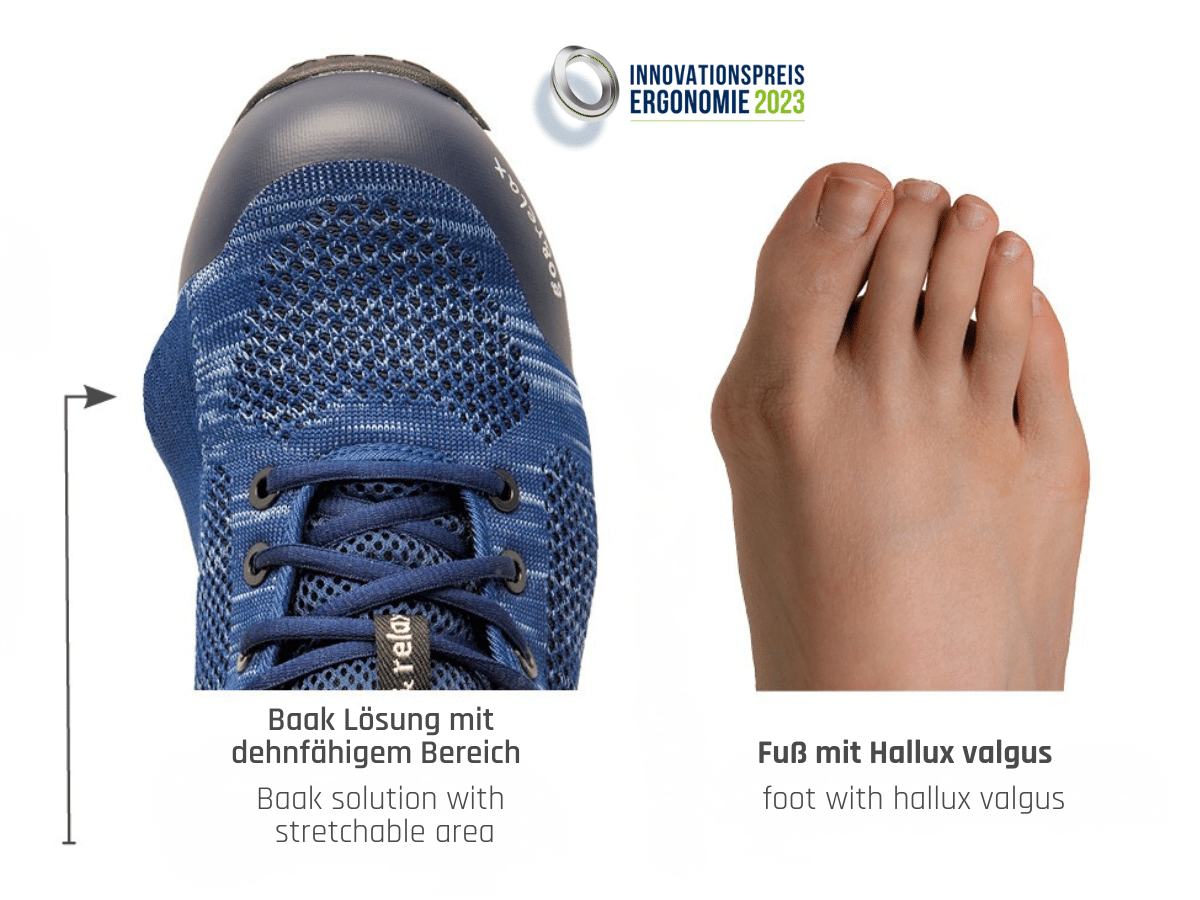
Comparison: Traditional Safety Shoe vs. Hallux Valgus Safety Shoe
| Characteristic | Classic Safety Shoe | Hallux Valgus Safety Shoes |
|---|---|---|
| Toe room | standard | spacious forefoot area |
| Mold shape | often narrow | anatomically contoured |
| Material flexibility | low | high |
| Pressure on the ball of the foot | higher | reduced |
| Freedom of movement | limited | of course |
| Comfort | depending on the fit | Designed for extended wear |
What treatment options are available?
The appropriate treatment depends on the severity of the misalignment and your individual symptoms. Always seek comprehensive, expert advice from your doctor.
Conservative Treatment
In many cases, symptoms can be relieved without surgery. These include:
- Targeted foot exercises
- Physical Therapy
- custom-made insoles
- Night Splints and Taping
- appropriate footwear
The sooner these measures are implemented, the more effectively excessive strain can be minimized.
Operation
Surgery should always be the last resort. It is usually recommended when:
- severe pain persists,
- if conservative measures do not yield sufficient results,
- the misalignment is significantly advanced.
Good to know: Even after a successful surgery, wearing the right shoes remains important to prevent recurring improper weight distribution as much as possible.
What can you do on your own in your daily life?
In addition to properly fitting safety shoes, even small changes can often make a difference.
Move your feet regularly
Short mobilization exercises promote flexibility and activate the muscles of the foot.
Don't squeeze your toes
Even outside the workplace, shoes should provide your feet with enough room in the forefoot.
Check the condition
Over time, materials and fit change. A worn-out shoe can cause pressure points.
Making Good Use of Deposits
Custom-fitted insoles can improve pressure distribution, but they are no substitute for a properly fitting shoe.
Our Practical Experience

"At Baak, we focus every day on how safety shoes can better support the foot's natural function.
In conversations with patients, it becomes clear time and again that symptoms are often not caused by hallux valgus alone, but by a combination of the deformity and ill-fitting shoes.
That is why we take a holistic approach to developing hallux-friendly safety shoes: more space for the forefoot, an anatomical fit, and materials that do not unnecessarily constrict the foot. Our goal is to allow the foot to move as naturally as possible, despite the requirements of a certified safety shoe.
This will not cure hallux valgus. However, the right safety shoes can help reduce pressure, improve range of motion, and make your workday noticeably more comfortable.”
Frequently Asked Questions
Frequently asked questions
Wearing safety shoes alone does not usually cause hallux valgus. However, a consistently tight fit can contribute to existing misalignments or exacerbate symptoms.
Suitable models feature ample space in the forefoot, an anatomically shaped last, flexible materials, and minimal pressure on the ball of the foot. Baak offers special models for hallux valgus. These feature, for example, a stretchy material in the forefoot area. Hallux models are available for both women and men.
No. Insoles can improve pressure distribution and relieve discomfort, but they do not correct the misalignment.
As long as your individual situation allows, walking barefoot can strengthen the muscles in your feet. If you have existing foot problems, you should consult an orthopedic specialist before doing so.
Conclusion
Hallux valgus is a common foot deformity that can significantly impact daily work life. However, taking action early on can go a long way toward reducing discomfort and maintaining foot health in the long term.
In addition to exercise, targeted strength training, and, if necessary, physical therapy, the right footwear plays a key role.
Especially during the workday, safety shoes should not put additional strain on the foot but rather support its natural function. An anatomical fit, sufficient toe room, and even pressure distribution can play a key role in making even long workdays more comfortable.
Key Points at a Glance
- Hallux valgus is a deformity of the big toe.
- The causes are usually genetic predisposition, improper foot alignment, and ill-fitting shoes.
- Symptoms are often caused by pressure on the metatarsophalangeal joint of the big toe.
- While the right safety shoes can't cure pain, they can significantly reduce it.
- The key factors are an anatomical fit, sufficient toe room, and as natural a range of motion for the foot as possible.
Photo credit: Baak GmbH & Co. KG. This post also features a licensed stock photo (ID 721989682).