

Who pays for safety shoes?
The Most Important Rules for Employees and Employers
Anyone who is required to wear safety shoes at work will sooner or later ask themselves: Who actually covers the cost? Does the employee have to buy the shoes themselves, or is the employer required to provide them?
In a nutshell:
If safety shoes are required by law as personal protective equipment (PPE) based on a risk assessment, the employer must cover the costs. This is stipulated in Section 3 of the Occupational Safety and Health Act.
But what about work shoes you choose to wear on your own? What are the rules for orthopedic insoles? And when are you entitled to new safety shoes? We’ve summarized all the answers for you in a concise guide.
Who is responsible for paying for safety shoes?
As a general rule: If safety shoes are required as personal protective equipment, the employer bears the costs. Employees may not be required to contribute to these costs.
This obligation stems from the Occupational Safety and Health Act. Employers must inspect workplaces for potential hazards and provide appropriate protective measures. This includes foot protection when there are risks to the feet.
The employer must provide safety shoes in the following situations, among others:
- Construction work
- Warehouse and Logistics Jobs
- Manufacturing facilities
- Workshops
- Skilled Trades
- Working with Heavy Objects
- Areas where there is a risk of being pierced, struck, or crushed
If such a hazard exists, safety shoes are not an optional benefit but a requirement.
When is an employer required to provide safety shoes?
The starting point is always what is known as a risk assessment.
In doing so, the employer assesses the risks to which employees are exposed while working. For example, if feet could be injured by falling objects, sharp materials, wet conditions, or heavy loads, appropriate foot protection must be provided.
What matters here is not the job title, but the actual work performed.
Are employees required to buy their own safety shoes?
In most cases, no.
If safety shoes are required, the employer may not pass the costs on to the employees. However, the employer may delegate the responsibility for purchasing safety shoes to the employee within the framework of company guidelines.
The employer may either purchase the shoes directly or reimburse the employee for the purchase price.
The situation may be different if, as an employee, you want to choose a more expensive model of your choice that exceeds the specified requirements and the company's budget. In such cases, some employers may agree to a voluntary co-payment.
However, the employer must fully fund the required basic equipment.

Is there a maximum limit on the cost of safety shoes?
There is no legally established upper limit on the cost of safety shoes. Rather, the key requirement is that the employer provide personal protective equipment that is suitable for the specific job and complies with applicable standards. If safety shoes are required based on the risk assessment, the employer must cover the full cost.
Real-world example
Due to the nature of their work, an employee needs Class S3 safety shoes. The model provided by the company costs 130 euros and meets all requirements. In this case, the employer covers the cost.
If, on the other hand, the employee wants a specific brand or a premium model for 180 euros, even though the less expensive model meets all safety requirements, the company can agree to a co-payment to cover the difference. In this case, the employee pays the 50-euro difference.
The situation is different when special requirements exist, for example, due to exceptional physical demands, specific areas of use, or individual foot shapes, such as foot deformities. In such cases, the employer must also cover the cost of a correspondingly more expensive model, provided that it is necessary to ensure safe use.
Are employees allowed to use the safety shoes provided for personal use?
That depends entirely on the company's policies.
Since safety shoes are purchased as personal protective equipment under the Occupational Safety and Health Act, they are generally intended for professional use. Many employers allow personal use, while others expressly prohibit it.
The company's internal guidelines are the governing factor.
What are employees' responsibilities?
The fact that the employer covers the costs does not mean that employees bear no responsibility. Employees must:
- Wear the safety shoes provided
- Report any damage you notice
- Use the shoes as intended
- Follow the care instructions
Anyone who fails to wear the required safety shoes risks disciplinary action under labor law and also increases their own risk of an accident.
How often does the employer provide new safety shoes?
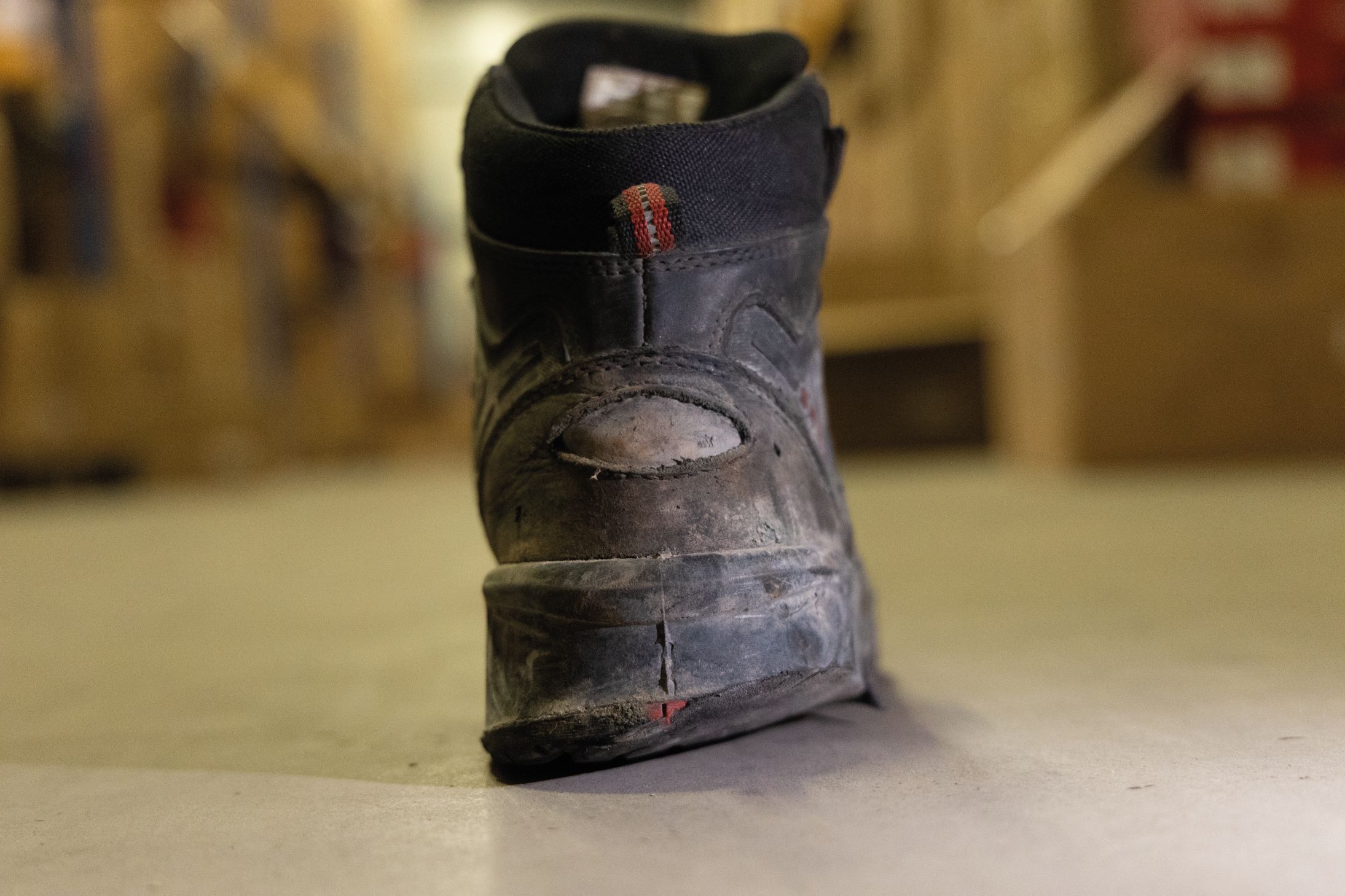
Safety shoes should not be replaced after a set period of time, but rather based on usage, the work environment, and wear and tear. If damage is detected on the sole, toe cap, upper, or cushioning, safety shoes should be replaced with new pairs immediately. The employer is responsible for the cost of replacement.
Other guide topics that might interest you:

Conclusion
If safety shoes are required based on a risk assessment, the employer covers the costs. This also includes replacement purchases due to wear and tear or damage.
Employees may not be required to pay for mandatory PPE.
For employees, this means that anyone required to wear safety shoes is generally entitled to appropriate and functional equipment.
The following applies to employers: Providing safety shoes is not a voluntary benefit, but rather part of their legal obligations regarding workplace safety.
Frequently Asked Questions
Frequently asked questions
If Safety shoes are used as personal protective equipment required is, the employer cover the costs cover.
No. Employees may not be required to share the cost of required safety shoes.
There are no statutory time limit. New shoes must be provided be, as soon as the protective function is anymore guaranteed anymore. You can find more information on this topic in our guide article “How Often to Replace Safety Shoes.”
The Safety Shoe is usually by the employer provided. For orthopedic Fittings can depending depending case be cost bearers responsible .
Expenses incurred out of pocket for safety shoes required for work may be tax-deductible under certain conditions. However, you should consult a tax advisor or the tax office to clarify your specific situation.